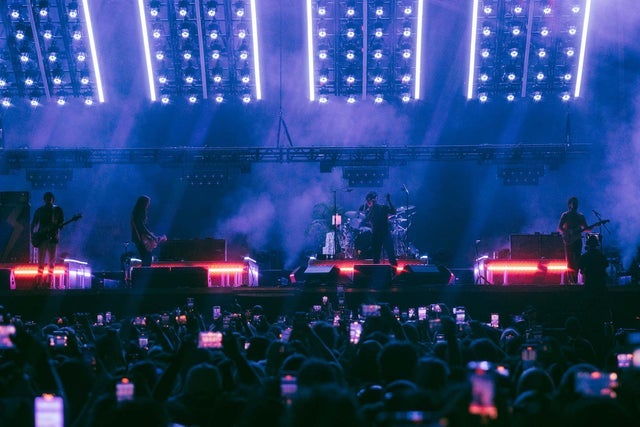
The Strokes came out of early-2000s New York with wiry guitars, clipped rhythms, and a cool vocal drawl. The original five are still together, though they favor short runs and long gaps between releases.
Vintage cool, present tense
Their musical identity leans on interlocking guitar lines and a motorik drum pulse that keeps everything brisk.
Songs that might surface
Likely anchors include
Last Nite,
Reptilia, and
The Adults Are Talking, played close to record tempo. A deeper pull like
Hard to Explain or
Under Cover of Darkness often rotates through depending on the city. The crowd is a blend of first-wave fans in lived-in denim and newer listeners holding film cams, trading smiles more than shoves. Trivia worth knowing: much of
Is This It was cut at Transporterraum using small amps for bite, and the US press swapped
New York City Cops after 2001. Treat any setlist or production details here as informed expectations, not guarantees, because the band shifts choices from night to night.
The Strokes Crowd: Vintage Threads, New Ears
Style with a scuff
You see worn leather, thrifted blazers, skinny ties, and scuffed sneakers that nod to early-2000s videos without costume play. Film and point-and-shoot cameras come out before the house lights drop, and folks swap notes on deep cuts rather than volume levels.
Rituals, not routines
When a familiar count-in hits, the cheer is short and loud, then the room resets for the next downbeat. Merch skews clean and graphic, with stencil logos, subway colors, and tour posters that could pass as gallery prints. Between sets, playlists drift from
Television and
The Modern Lovers to
The Cars, and people call out which riff echoes which track. After the show, fans compare setlist photos and circle songs they still have not caught, already eyeing the next date.
How The Strokes Build the Snap
Two guitars, one engine
On stage,
The Strokes keep the vocal mostly dry with a light slap, letting the drawl sit above a tight pocket.
Albert Hammond Jr. and
Nick Valensi split duties, with one carrying clipped rhythm figures while the other threads bright melodies that answer the vocal. The rhythm section locks in with straight eighths, as
Fabrizio Moretti keeps hats crisp and
Nikolai Fraiture outlines chords with a pick for extra attack.
Pace over polish
Many songs run a touch faster live, which sharpens the punch and keeps transitions quick. They rarely stretch parts, preferring crisp turnarounds and near-record lengths that stack songs back to back. A subtle habit is keeping the guitars hard left and right in the mix, echoing the records so you can track each lattice line. Lights stay cool-toned with brief strobe accents on choruses, supporting the snap without pulling focus.
If You Like The Strokes, You Might Ride With These
Kin by groove and glare
Fans of
Arctic Monkeys will connect with tight riffs, dry wit, and a steady swing that snaps live.
Interpol share the NYC post-punk chill and a precision-first stage feel where every hit lands clean.
Scenes that echo
If you like a spikier, art-pop edge,
Yeah Yeah Yeahs pair raw textures with big, chantable hooks.
Franz Ferdinand mirror the danceable guitar patterns and clipped rhythms that keep crowds moving without chaos. All four acts favor lean arrangements where bass and drums drive, letting guitars jab and answer the vocal. Their fanbases overlap because the songs arrive fast, the grooves feel urban and tight, and the shows aim for momentum over spectacle.