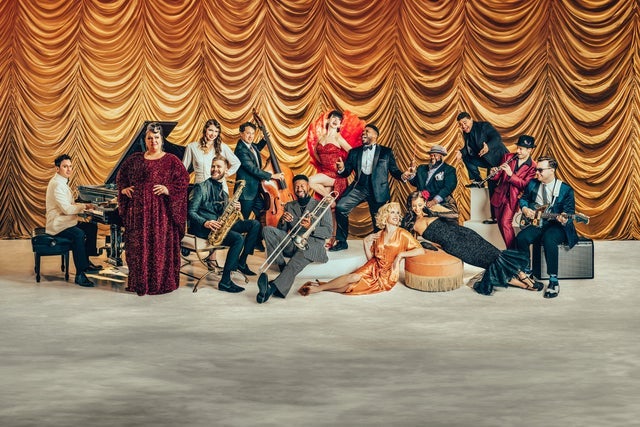
From YouTube to big-band spectacle
The project began when pianist
Scott Bradlee arranged pop hits in a small Queens apartment and filmed them live. Its identity is a rotating cast that flips modern songs into 1920s jazz, swing, doo-wop, and soul, with tight charts and room for solos. After the shutdown years, the group returned with even more guest vocalists and a heavier tap feature, so the lineup can differ night to night. Expect crowd-pleasing turns like
All About That Bass,
Creep,
Bad Romance, or a brassy
Seven Nation Army, all rebuilt with vintage rhythms. The crowd skews mixed-age, with some fans in sharp suits or flapper-style dresses, and others in band tees, all leaning in for call-and-response verses. A neat bit of lore: early sessions were cut in one take around a single mic, and some videos still keep that rule as a challenge. They also sometimes bring a local singer or horn player up for a cameo.
Who shows up and what you might hear
Note that any setlist and production mentions here are informed guesses from recent runs, and your show could play out differently.
The Scene Around Scott Bradlees Postmodern Jukebox
Dress sharp, dance ready
You will spot suspenders, bow ties, flapper-style fringe, and two-tone shoes next to jeans and sneakers, and no one looks out of place. Small pockets of swing dancers often find space near the back or aisles, turning mid-tempo numbers into easy two-steps. Call-and-response moments pop up on big choruses, and a playful bandleader bit can turn the crowd into a horn section with claps.
Traditions in the room
Merch tends to skew classic, with vinyl, art-deco fonts, and posters that look like old 78 labels. Fans trade favorite cover versions from the channel, comparing which singer they hope to see and which arrangement surprised them. After the show, people hang on the edges chatting about the tap break or a trumpet solo, more like a jazz club let-out than a pop exit.
How Scott Bradlees Postmodern Jukebox Makes It Snap Live
Arrangements that swing and surprise
Vocals take the lead, but the band shapes each song so the singer can sit in the groove rather than fight it. The piano often moves in a stride pattern, which means the left hand jumps between bass notes and chords to make a danceable pulse. Horns answer the vocal lines with short riffs, and clarinet or muted trumpet will carry the melody when the verse relaxes. Drums favor brushes and light snare accents, then switch to stick work for a double-time lift on the final chorus.
Small details that change the feel
The bass stays mostly acoustic with a touch of slap for attack, which tightens the pocket without getting loud. A neat live habit is to drop the key or slow the bridge so the last chorus can pop with a key change, making familiar hooks feel fresh. Lighting supports the music with warm ambers for torch numbers and crisp whites for up-tempo swing, staying out of the way of the solos.
Kindred Ears: Scott Bradlees Postmodern Jukebox Fans Might Also Dig
Retro vibes, modern polish
If you enjoy this hybrid of swing and pop,
Pink Martini brings cosmopolitan arrangements with vintage flair and a multilingual stage show that draws similar crowds.
Lake Street Dive leans on soulful vocals, upright bass, and crisp grooves, capturing the same mix of classic tone and modern hooks. Fans who like clever cover craft and tight studio-to-stage execution often follow
Pomplamoose, whose live band reworks pop with jazz colors. For instrumental fire and horn-forward fun,
Cory Wong channels funk energy and clean arrangements that match the feel of a sharp PMJ set.
Why these acts connect
These artists favor melody, pocket, and a friendly stage presence, so their rooms feel welcoming yet musically focused. They also prize real-time musicianship, which means solos, dynamic shifts, and the occasional audience sing along land with the same spirit you hear here.