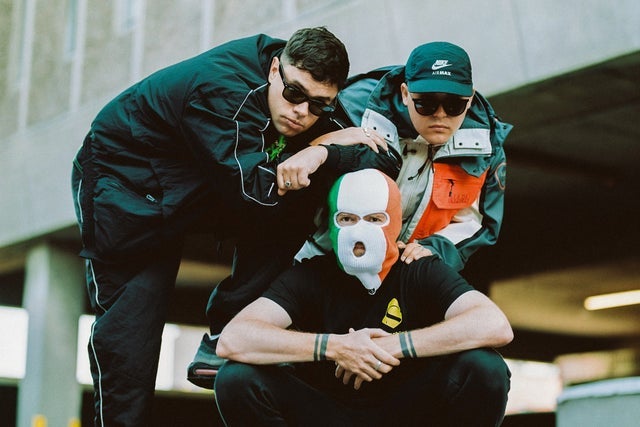
Belfast grit, Gaeilge wit
Kneecap are a Belfast-born Irish-language rap trio known for sharp humor, heavy beats, and bilingual bite. Their biggest shift lately is cultural reach: a self-titled film and bigger stages have pushed them from cult rooms to headline slots without softening the edges. Live, the two MCs riff off each other while the DJ drives grime-speed rhythms and thick low end.
What you might hear
Expect a set built around
Get Your Brits Out,
Better Way to Live, and
C.E.A.R.T.A., with
3CAG popping up when the room is ready to bounce. The crowd skews mixed in age and background, from Irish-language learners and local rap heads to curious indie fans, and the energy is rowdy but watchful of each other. A small but telling detail: early shows in West Belfast Irish-language nights shaped their code-switch style, and they still slip local slang and in-jokes between hooks. Note: songs and production cues mentioned here are educated guesses based on recent shows, not a fixed plan.
The Kneecap crowd in detail
Jerseys, bucket hats, and Gaeilge on tees
Around a
Kneecap gig, you see GAA jerseys, vintage Adidas, and DIY shirts with Irish phrases next to Belfast in-jokes. People switch languages mid-chat the way the verses do, and you hear short callouts in Irish between songs. Pits break out near the front for the rowdiest numbers while the edges stay loose, giving space to dance in pairs or watch the wordplay.
How the room moves
Homemade banners and tricolor bucket hats show up, but the focus stays on the beat and the back-and-forth onstage. Merch trends toward stark typography, bilingual slogans, and black-on-neon designs that read clearly from across the room. The mood feels like a town-hall party: local stories told loud, plenty of humor, and a shared code that keeps things lively without crossing lines.
How Kneecap hit: sound over spectacle
Bilingual flow, bass-first impact
Kneecap drive the night with call-and-response verses, flipping between Irish and English so the punchlines land in two rhythms at once. The DJ favors tight kick-snare patterns and sub-bass that sits just under the vocal, leaving space for chants to cut through. Hooks often get a halftime feel live, which lets the crowd reset before the next sprint.
Small tweaks that land big
They sometimes reframe a verse over a different beat onstage, turning a straight 140 feel into a slower bounce to highlight a line. Vocals are pushed bright with a touch of slapback, while backing mics carry gang shouts that make choruses feel bigger without clutter. A neat detail: the 808 notes are tuned to the loop so the low end hums like a drone under the melody, which is why those drops feel glued to the hook.
If you rate Kneecap, you might also lean this way
If you like talky fire and thick beats
Fans of
Sleaford Mods often click with
Kneecap because both spit pointed social commentary over minimal, punchy production. If
The Streets is your blueprint for everyday storytelling over club-tempo drums, this show scratches a similar itch with a rougher Belfast accent and Irish wordplay.
Crossovers worth noting
Fontaines D.C. fans overlap through post-punk grit and a literary streak that turns local slang into hooks. Rap listeners who rate
Kojaque for moody, homegrown realism will find
Kneecap hit harder, but with the same place-specific detail. All four acts draw crowds who value lyrics first, mosh when it fits, and respect a dead-stop silence before the drop.