From Choir Loft to Chart-Topper
John Legend came up through church choirs and college a cappella before breaking out with a warm blend of soul, pop, and gospel. Expect stories from
Get Lifted days to his work on film songs, told in calm, wry detail. A likely arc brings piano-led takes on
All of Me,
Ordinary People,
Green Light, and
Glory.
What the Night Might Sound Like
The room tends to skew date-night and multi-generational, with dressed-up fans whisper-singing verses and saving the big notes for the choruses. Deep cut trivia: he played piano on
Lauryn Hill's
Everything Is Everything, and
J. Ivy helped coin his stage name. On theater runs he often strips arrangements to piano, a small rhythm section, and a few tasteful string pads. Everything about the set and production listed here is an informed hunch, not a locked-in plan.
The John Legend Crowd, Up Close
Date-Night With Choir Energy
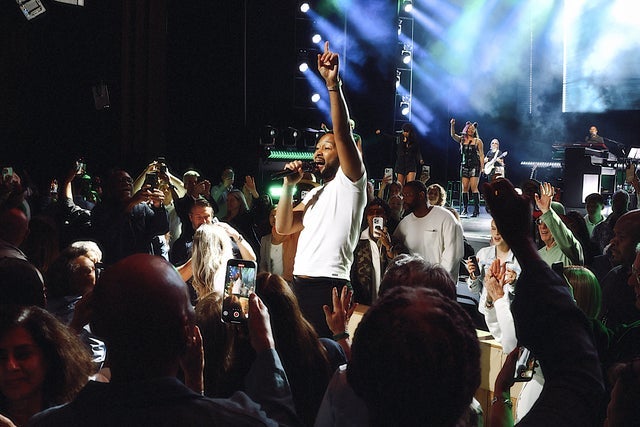
You will see sharp jackets, simple dresses, and sneakers that pass the dinner test, more supper-club than club-night. People tend to hum along in the verses, then swell into full harmony on the big refrains, a habit learned from church and TV moments alike. During
All of Me, couples often link arms and hold phones low for a soft glow rather than a bright wave.
Little Rituals, Big Heart
Merch leans tasteful: lyric tees in subdued fonts, a piano-key motif, and sometimes a tour book with short song notes and family photos. Between songs, short shout-outs get answered with a grin and a one-line story, not a big speech, which keeps focus on the music. Older fans nod at
Get Lifted references while newer fans from The Voice era perk up at film songs and recent singles.
How John Legend Builds the Room's Sound
Piano First, Band Next
John Legend's voice sits warm and centered, with a gentle rasp that opens up on high notes rather than pushing. Live, he lets the piano steer phrasing, which means verses can breathe and choruses hit with clean, ringing chords. The band usually builds around tight drums, a rounded bass tone, and soft keys or string pads, giving him headroom to speak, sing, and then swell.
Small Tweaks, Big Feel
He favors clear song shapes, often holding back a beat before the final chorus so the crowd lands together. A neat detail: he sometimes stretches the bridge of
Green Light into a brief halftime groove before snapping back for the last hook, which adds lift without extra volume. Lighting tends to follow the music, staying warm amber for ballads and shifting to cooler hues for uptempo moments, with no gimmicks to distract from the phrasing. On older songs like
Ordinary People, he trims runs and plays fewer notes, letting silence between chords do some of the talking.
Kindred Spirits for John Legend Fans
Neighboring Sounds
Fans of
Alicia Keys often cross over, since both craft piano-driven R&B with confessional hooks and call-and-response moments. If you like the soulful guitar shimmer and easy glide of
H.E.R., you will likely ease into
John Legend's quieter mid-set stretches. The retro warmth and gentlemanly stage pace of
Leon Bridges maps well onto his classic-leaning ballads.
Why It Fits
For big-voice catharsis and choir-tinged endings,
Sam Smith occupies a nearby lane. All four acts favor melody first, keep tempos unhurried when the story needs space, and treat dynamics as part of the drama, not just volume. So the overlap comes from tone and intent rather than identical production styles, which makes playlist-to-stage jumps feel natural.