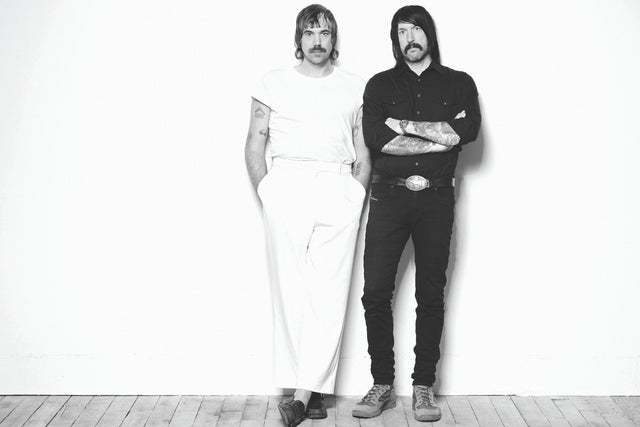
Dance-floor fury, basement heart.
Fuzz bass as a lead instrument.
Death From Above 1979 formed in Toronto as a bass-and-drums duo that fuses punk drive with club-ready rhythm. After an early run built on
You're a Woman, I'm a Machine, they split in 2006 and later returned sharper and more focused. Follow-ups
The Physical World and
Is 4 Lovers sharpened the hooks without sanding off the grit. Expect anchors like
Romantic Rights,
Black History Month, and modern staples
Trainwreck 1979 and
Freeze Me. The room usually holds lifers in black denim, newer fans in bright trainers, and a few gearheads near the board listening for low-end detail. Two fun bits: the band added 1979 to avoid confusion with DFA Records, and on late-night TV they once handed the kit to the house drummer mid-song while keeping the beat alive. Take the setlist and production talk here as informed speculation; they tend to pivot on instinct when the room demands it.
The World Around Death From Above 1979
Black denim, bright smiles.
Shared volume, shared courtesy.
The scene skews practical and loud, with scuffed boots, band pins, and earplugs worn without apology. You will see older fans mouthing early
You're a Woman, I'm a Machine cuts next to newcomers who found
Freeze Me on playlists. Between songs, pockets start a tight clap pattern or short chant, and the band often answers with extra hits. Merch trends lean to monochrome tees, the elephant icon, and big-type posters that mirror the music's blunt edges. Pits are active but watchful, with people picking each other up fast and making room for shorter fans near the rail. Pre-show talk tilts to gear, from octave pedals to drum heads, and post-show chatter circles how locked the push-pull felt. It reads as a community built on volume and respect rather than trend chasing.
How Death From Above 1979 Makes Two Sound Like Ten
Two instruments, three dimensions.
Small moves, big impact.
Vocals ride a rough edge but turn tuneful on choruses, often doubled with a gritty mic texture that cuts through the fuzz. The core trick is a bass run through heavy distortion and an octave-up effect, so chords feel wide without a guitar in the mix. Drums keep straight, bouncey patterns that flip to dense fills at section changes, giving the set a rubber-band feel. Live, they like to stretch bridges by dropping to half-time and then snapping back to full speed for impact. A lesser-known detail: the bass often sits in drop D or lower, letting single-note riffs hit like kicks while leaving space for the voice. Lights lean on stark strobes and bold color blocks that mark tempo shifts instead of chasing them. Arrangements breathe because the bassist leaves tiny rests between hits, and the drummer mirrors those gaps so every riff lands harder.
If You Like Death From Above 1979, Try These Kin
Kindred noise with big hooks.
Where punk meets pulse.
If
Royal Blood sits on your playlists, this show lands too because both hit hard with bass-forward riffs and crisp, roomy drums. Fans of
The Kills will hear a similar stripped frame, dry vocals, and grime that still rides a beat.
Japandroids share the two-piece spirit and shout-along lift, even if the guitar edge swaps for a fuzzed bass here. Listeners drawn to the desert swing and precise thump of
Queens of the Stone Age will recognize the locked grooves and off-kilter hooks. All four acts value economy, letting small arrangement choices do the heavy lifting. They also draw crowds that want songs to move the body as much as the brain.