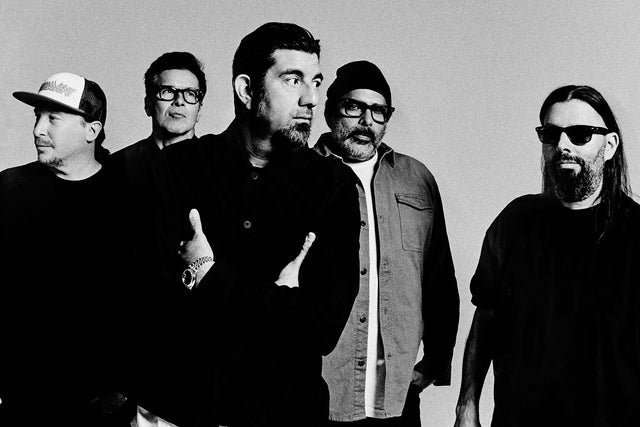
Deftones came out of Sacramento with a heavy-but-airy mix that lets riffs hit hard while vocals float.
Loud meets weightless
The current live identity reflects change: longtime bassist Sergio Vega departed in 2021, and the group now relies on touring players to cover bass and extra guitar while the core four drive the mood. Expect a set that swings from whisper to roar, with likely anchors like
My Own Summer (Shove It),
Change (In the House of Flies),
Digital Bath, and
Diamond Eyes. You will hear patient builds, sudden drops, and choruses that bloom rather than shout.
Who shows up
Crowds skew mixed-age, with 90s alt-metal lifers next to newer fans drawn to the atmospheric side, and the pit usually stays center while a head-nod ring forms behind it. You may spot as many people eyes-closed during quiet passages as you will see jumping when the drums slam in. Trivia: the band shelved the in-progress
Eros after Chi Cheng's 2008 accident, a choice that cleared space for the focused push of
Diamond Eyes. Also, sampler Frank Delgado became a full member by
White Pony, which is why the live show gives synths and textures real room rather than treating them as background. For clarity, the setlist and production notes here are informed guesses rather than confirmed details.
The Deftones Crowd, Up Close
Style signals, not costumes
You will see black denim, lived-in skate shoes, and old
White Pony shirts next to fresh minimalist designs from newer eras. Many fans wear earplugs and gravitate near the soundboard, a sign people come to actually hear the mix, not just chase volume. Chants tend to be short and specific, like a quick name-call between songs, while quiet numbers pull the room into a hush.
Rituals without the script
In the pit, movement is assertive but watchful, with folks pausing to reset when a slow song lands, then surging back on the next riff. Merch leans toward clean iconography, from the pony silhouette to stark geometric prints, with a few limited colorways that sell fast. Pre-show playlists often nod to 90s and early-2000s alternative and trip-hop, mirroring how the band blends mood with muscle.
How Deftones Build Tension and Release
Space as an instrument
The vocals shift from breathy falsetto to a barked roar, and the band leaves space so both sides land cleanly. The low-tuned guitars carry the weight, but the riffs use open shapes so chords ring and leave room for the melody. The drums have a springy snare feel that keeps slow tempos alive, with tiny ghost hits that make the groove bounce. Frank Delgado's keys and samples act like a second sky, filling the gaps with swells, vinyl crackle, and sub drops instead of busy lines.
Small choices, big impact
Live, they sometimes stretch the bridge of
Change (In the House of Flies), letting synth pads bloom before the last chorus for extra breath. Expect lighting that follows the dynamics, with cool tones for airy passages and sharp strobes on the hits, always in service of the songs. A subtle habit: the band often plays a hair under studio tempo on pieces like
Digital Bath, which makes every crash feel heavier and gives the vocal more room to phrase.
Similar Paths: Why Deftones Fans Cross Over
Nearby sounds on the map
Fans who chase layered heaviness and patient builds will feel at home with
Tool, whose shows favor dynamics and texture over speed.
Korn draws a similar crowd for its elastic groove and low-slung, cathartic riffs, though their bounce is rowdier.
Gojira brings a cleaner, modern punch with rhythmic precision and tidal low-end swells, echoing how
Deftones balance weight and atmosphere.
Why the overlap works
For hook-forward heavy rock,
Chevelle connects on the chorus lift and mid-tempo drive. Across these acts, the common thread is contrast: quiet-to-loud arcs, patient intros, and drum parts that push air rather than just speed. If those traits matter to you, this bill will likely hit the same parts of your brain.