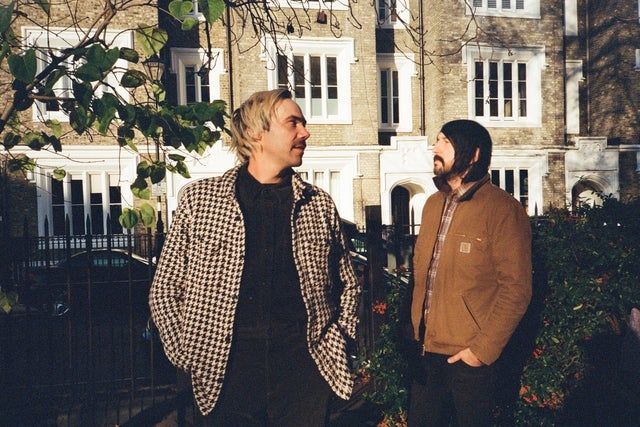
Two people, hurricane sound
Born in Toronto, the duo built a name on fuzzed-out bass, clipped drums, and dance tempos that hit like punk. After a mid-2000s split and a 2011 return, they have settled into a focused, harder-grooving version of the same idea.
What might get played
Expect anchors like
Romantic Rights,
Trainwreck 1979,
Freeze Me, and
One + One, with short noise codas and sharp transitions. The room skews mixed in age, with early fans swapping nods next to younger listeners who found them through playlists, and the pit expands and contracts rather than boiling nonstop. Early sessions for
You're a Woman, I'm a Machine were cut with few overdubs, which is why the live show so closely mirrors the record. They added '1979' to the name after a label dispute, a small change that also nods to the drummer-vocalist's birth year. Consider these set picks and staging notes informed guesses from recent runs rather than a locked plan.
The Scene Around Death From Above 1979
Black denim and bright claps
You will see black denim, weathered band tees, and practical shoes built for bouncing, plus a few leather jackets from fans who were there a decade and a half ago. Near the barricade, small circles open and close with the loud sections, while farther back people lock into the pulse and nod in time. Expect a loud sing-back on the 'I don't need you' lines in
Romantic Rights, and a unison clap when the drums drop to quarter notes.
Shared noise, no pretense
Merch leans simple and graphic, with the elephant-head icon popping on black or neon, and vinyl moving fast at the end of the night. Conversations skew gear-nerdy, with strangers trading notes on pedals and drum tunings, but it stays friendly and quick between songs. It feels like a rock show built for dancing, where sweat and smiles share the floor without posturing. Old and new fans alike treat the duo's catalog like a shared scrapbook, cheering deep cuts as loudly as the singles.
How Death From Above 1979 Sounds So Big Onstage
Two amps, one bass
The vocal approach is a tuneful shout, with quick jumps to a cleaner head voice on choruses like
Freeze Me, and it cuts because the mix leaves space up top. The bass carries both roles via a split rig: a fuzzed low path to a bass cab and an octave-up path to a guitar cab, so chords read like a rhythm guitar while the root still thumps. Live, they trim intros, kick tempos up a notch, and favor abrupt stops that keep the room on its toes. A neat quirk: many riffs sit on a bass tuned below standard, so slides land with a rubbery wobble that feels bigger than two people on stage.
Hooks carved from noise
Drums are tight and dry, with the kick often pumping four-on-the-floor during dance breaks while the snare stays crisp, leaving room for the bass fuzz to bloom. They like to reframe songs live, swapping a riff order or stretching a noise bridge before snapping back to the hook, especially on
Romantic Rights. Lighting is usually stark and rhythmic, heavy on white strobes and silhouette looks that serve the punch rather than distract.
Kindred Noise: Fans of Death From Above 1979 Might Also Go Here
Less players, more punch
Royal Blood fans will click with the bass-and-drums power and the way riffs carry the night.
METZ share the serrated edges and volume-first stage craft, but both bands also sneak in tight hooks under the grit.
IDLES bring a communal shout and a blunt groove that mirrors the duo's stomp when the kick goes four-to-the-floor.
The Kills overlap in the sultry, minimal approach, trading big bands for space, texture, and deadpan swagger. If you like duos that fill the stage without extra players, these shows speak the same language even when tempos and accents differ. The common thread is catharsis delivered with economy, not layers. Fans chasing danceable punk with bold low end will feel at home across these bills.