


Find $uicideboy$ present Grey Day Tour 2026 w. Shoreline Mafia & more presale passwords here.
Scroll down for the performance list. Members get instant access to all presale codes. Click a yellow Subscribe link to join.
There is 1 $uicideboy$ present Grey Day Tour 2026 w. Shoreline Mafia & more presale happening right now.Scroll down for the performance list. Members get instant access to all presale codes. Click a yellow Subscribe link to join.
Plus: 1 more password coming soon - select an event to be notified.
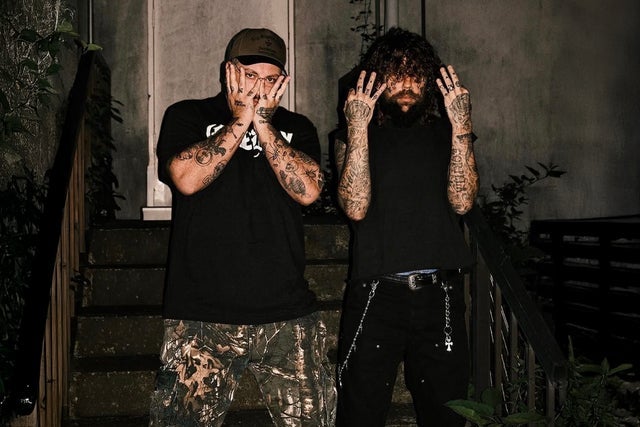
Right now there are presales for $uicideboy$ present Grey Day Tour 2026 w. Shoreline Mafia & more with events scheduled in West Valley City, UT.
Find more presales for shows in West Valley City, UT
Show $uicideboy$ present Grey Day Tour 2026 w. Shoreline Mafia & more presales in more places
Grave Waves with $uicideboy$
$uicideboy$ are New Orleans cousins Ruby da Cherry and Scrim, known for bleak trap beats, punk grit, and diaristic lyrics about self-doubt and survival.
Dark Gulf South roots, punk heart
In recent years, Scrim's public sobriety and the duo's focus on clarity have sharpened their writing and tightened the live arc without dulling the edge. Expect anchors like Paris, 2nd Hand, and Antarctica, with a late-set chant moment on Kill Yourself (Part III) if they feel like going deep.What they might play and who shows up
Given the shared bill, a drop-in from Shoreline Mafia on a West Coast bounce cut would not surprise, or they might splice a verse from a posse track into a medley. The crowd skews mixed in age, with beat-scene kids in workwear next to punk-leaning rap fans in scuffed skate shoes, and a lot of black G59 hoodies and caps. Pits open and close fast, people pick each other up, and you can feel the room hold still when a confessional hook lands before the bass returns. Before this project, Ruby da Cherry played guitar in local punk bands while Scrim DJed and learned to flip dusty Southern cassette loops. Many early tracks were cut in small home setups with minimal gear, which helped cement their clipped vocals and dry, upfront mix as a signature. Setlist picks and production expectations here are reasoned projections and may not mirror the exact choices on the night.The Grey Day Micro-Scene Around $uicideboy$
Black-on-black, but make it personal
You will see black cargos, patched denim, and G59 hoodies next to vintage metal tees, with skate shoes and beat-up boots doing most of the work.Shared catharsis, not carelessness
Merch leans heavy on block fonts, stark logos, and zip hoodies, plus a few limited drops that nod to old tape art. Before the lights drop, pockets of the crowd chant G five nine, and the shout often returns between songs when the subs fade. Pits open in bursts near the middle and then settle, and people keep an eye out to lift someone quick if they slip. Conversations ride from which Kill Yourself tape matters most to how the newer records hit cleaner while staying raw. The mix of teens, twenties, and thirty-somethings reads less like a trend wave and more like a community that grew up on the internet and found a room together. After the final drop, the mood is spent but warm, with people trading stickers, comparing scuffed shoes, and making loose plans for the next Grey Day stop.How $uicideboy$ Build Pressure and Release
Two voices, one blunt message
Ruby da Cherry cuts with a nasal bark and quick cadences while Scrim drops a lower growl and the occasional sing-song hook, and the contrast keeps the tension high.Beats that hit like concrete
Arrangements ride on thick 808s, clipped hi-hats, and eerie keyboard lines, with hooks built from short phrases that the room can fire back. A DJ runs tight stems and mutes, carving space for dry vocals to sit right on top when the subs hit. They often nudge tempos a hair above the album versions so movement never stalls, which also makes drops feel sharper. To hold momentum, intros get trimmed, songs snap into medleys, and they will bail on a bridge if a chant is building. Longtime fans notice when a mixtape beat variant replaces an album cut, a small nod that rewards people who know the deep files. Lights stay stark and grayscale with strobes and smoke used as accents, framing the music instead of chasing spectacle.If You Like $uicideboy$, You'll Vibe With These
Kindred noise, different accents
Fans of $uicideboy$ often ride with City Morgue for the metal-scraped trap textures and unfiltered pit energy. Night Lovell brings the slow-rolling bass and baritone calm that suits late-night headphone heads who still want a hard drop live. Ghostemane leans industrial and punk, landing for fans who like harsh sound design with a cathartic shout. Shoreline Mafia share fans for the bounce, hooks, and party-mob feel, even if their tone is sunnier. Pouya connects through the old SoundCloud web and quick-tongue flows that pair well with dark Southern drums. Together these acts map the overlap between bleak confession, body-moving beats, and a crowd that favors immediacy over polish. The differences in tempo and vocal attack keep things complementary rather than redundant across a festival bill.Popular Concerts and Matching Presale Unlocking Codes
We are an independent information service and not associated with $uicideboy$ present Grey Day Tour 2026 w. Shoreline Mafia & more.
Learn more