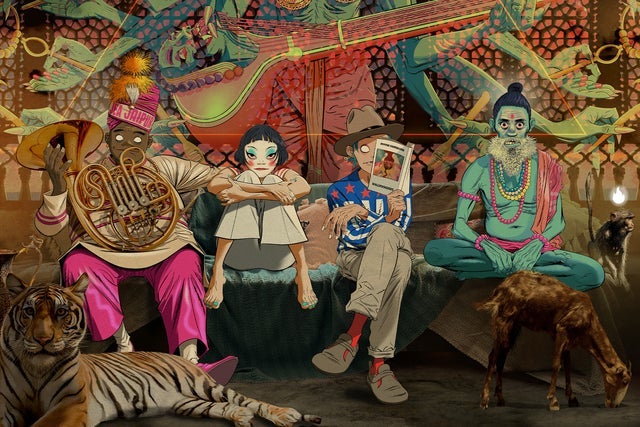
Gorillaz began as a virtual band from Damon Albarn and Jamie Hewlett, fusing pop hooks, rap features, dub bass, and cartoon art.
Pencils, pixels, and a pulse
In recent seasons the project has leaned on a tight road unit because guests rotate and
Damon Albarn has split time with
Blur, and since
Trugoy the Dove's passing the Feel Good Inc. verse hits like a tribute.
Expect anchors like
Feel Good Inc.,
Clint Eastwood,
On Melancholy Hill, and
Cracker Island, with room for a newer single or a deep cut from
Demon Days.
Who shows up and what they seek
The crowd skews mixed: longtime fans from the early 2000s shoulder to shoulder with teens drawn by the visuals, plus hip hop heads who came for the features.
You see graphic tees of Noodle and 2-D, bucket hats, and people comparing favorite phases of the band between songs.
Early tours played behind a screen with only silhouettes while animation ran, a trick they revived for special Demon Days shows.
Damon Albarn still pulls out the melodica live, doubling hooks that were synth lines on record, which is a small but telling carryover from the first sessions.
Note that these set and staging guesses come from past runs and could shift on the night.
The Gorillaz scene: color, cartoons, and community
Wear your phase on your sleeve
You will spot vintage
Demon Days shirts, varsity-style jackets with Noodle patches, and green face paint nods to Murdoc.
Cosplay shows up in small clusters, but most people keep it casual with graphic tees and beat-up skate shoes.
Chant moments arrive fast, like the crowd shouting "It's coming up" on
DARE and the "Windmill, windmill for the land" refrain on
Feel Good Inc..
Between songs, fans swap favorite guest verses and compare which city got a surprise appearance last run.
Shared rituals, big choruses
Merch leans art-first: screen-printed posters with new character poses, enamel pin sets, and vinyl variants with alternate sleeves.
The vibe feels neighborly more than wild, with older heads giving space up front to kids who want to dance, and everyone saving volume for the big hooks.
By the end, people are hoarse from the chorus lines and still pointing at the screen to name each character as they flash by.
Gorillaz under the hood: rhythm first, color second
Hooks built on a heavy pocket
Damon Albarn's vocal sits in a talk-sung range, and he leans on phrasing more than power, so the band shapes room around his lines.
Two percussionists or a drummer-plus-sampler setup thicken the groove, while bass stays round and slightly behind the beat to keep the sway.
Guitars often take clean tones so the synths can sparkle; horns step in to sing hooks that were once keyboard lines, especially on
Plastic Beach cuts.
They like to open up endings for call-and-response, and the choir pads in the choruses give even the darker tunes a lift.
Small tweaks, big payoff
A recurring live tweak:
Clint Eastwood often drops a key to sit lower, and the MC verse can be handled by a touring rapper like
Bootie Brown or a local guest.
Tempos are nudged up a notch compared to record on big singles, which tightens the bounce without losing the lazy sway that defines the project.
Visuals stay bold but not fussy, with animated vignettes acting like another instrument rather than a distraction.
If you like Gorillaz, you might lean into these
Kindred sounds, shared rooms
Fans of
Blur often cross over because
Damon Albarn's melody sense and sing-along hooks carry into this project, even as the beats punch harder.
If you love shadowy bass and filmic visuals,
Massive Attack chase a similar moodier lane.
People who want blown-out color and dreamy synths tend to follow
Tame Impala, and those shows share a head-nod tempo that keeps the floor moving.
Beck draws the crowd that enjoys genre left turns and a crate-digger spirit.
Where hooks meet low-end
For rap energy with big hooks and humor,
Run The Jewels hits the overlap, and their live drums and DJ balance mirror this band's blend.
Put together, these artists map the space where alt-pop, hip hop, and art-forward staging meet.