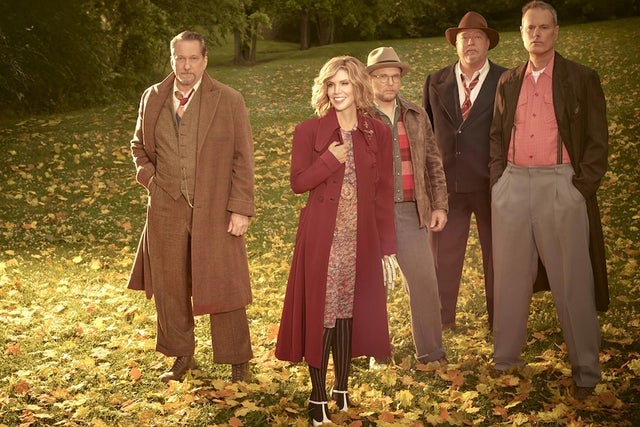
Alison Krauss grew from a fiddle prodigy in Illinois into the clear, steady voice at the center of Alison Krauss and Union Station with dobro master Jerry Douglas shaping the sound.
Clear voices, carved-in-wood strings
The full
Union Station lineup has toured less often in recent years, so this run feels like a return to the core band dynamic.
Expect a calm sweep of standards and band favorites like
The Lucky One,
Paper Airplane,
When You Say Nothing at All, and a rowdy
Man of Constant Sorrow led by
Dan Tyminski.
Songs fans lean toward
You will see bluegrass lifers comparing instrument builds, younger folk listeners drawn by soundtrack moments, and families who value tight harmonies and clear stories.
A neat footnote is that
Dan Tyminski was the singing voice behind George Clooney in the film O Brother, Where Art Thou?.
Also,
Jerry Douglas has logged well over a thousand recording sessions, which shows in his quick, conversational fills between lines.
Applause tends to pop right after each solo, and the hush during ballads makes the small details land.
Consider the setlist and production notes here as pattern-based insight rather than fixed commitments for the night.
The Bluegrass Room: Fans, Style, and Quiet Moments with Alison Krauss
Quiet focus, warm colors
You will spot denim and boots next to neat blazers, plus a few band tees from
So Long So Wrong and
Paper Airplane eras.
Early in the set, the room learns to hold applause until the last tail of reverb dies, and by mid-show people time claps to the final chop of the guitar.
Moments fans mark together
Singing along happens softly on choruses of
When You Say Nothing at All and louder on
Man of Constant Sorrow, often with a grin when the low harmony drops in.
Merch leans tasteful with letterpress posters, a few soft tees, a cap, and at least one vinyl pressing ready for a quiet spin at home.
During breaks, you hear talk about prewar Martins, dobro setup tricks, and which mic suits
Alison Krauss best on the night.
It is a multigenerational crowd that values listening, and the shared mood is less barroom shout and more living-room focus.
When the band steps into a single-mic circle, the hush tells you the culture here prizes craft over flash.
How Union Station Plays It: Warm Voices, Clean Lines
Strings first, song always
Alison Krauss keeps a light, centered tone, and the band stacks harmonies so her lead stays airy while
Dan Tyminski adds grit on verses that need weight.
Arrangements favor clean starts, short solos, and clear endings, so songs breathe instead of sprawl.
Jerry Douglas threads slide phrases that answer the vocal, often taking the first break, while
Ron Block shifts between banjo rolls and gentle guitar to glue the rhythm.
Subtle shifts that matter
Bass from
Barry Bales stays simple and deep, which lets the fiddle and dobro overtones shimmer without clutter.
Tempos live are a notch under studio speed on the ballads, and on fast tunes they ride a steady pocket rather than chase flash.
They sometimes gather at a single large condenser mic for a gospel or old-time number, using distance as the fader, which changes the color of the blend in a way recordings miss.
A small but cool habit is that the band will swap the order of breaks mid-tour to keep ears fresh, so a dobro lead one night might become a fiddle lead the next.
Kindred Pickers for Alison Krauss and Union Station Fans
Neighbors on the acoustic map
If you connect with the elegance and drive here,
Ricky Skaggs is a natural neighbor for his tradition-forward picking and trio harmonies.
Nickel Creek appeals to fans of nimble acoustic interplay and youthful warmth, sharing the same affection for tight arrangements and space.
Why these shows feel related
Punch Brothers push the form into chamber-like detail, which suits listeners who enjoy immaculate mic technique and patient builds.
For instrumental sparkle and odd-meter detours that still land sweet,
Bela Fleck sits in the same orbit as
Jerry Douglas when it comes to jaw-dropping but musical solos.
Fans who prize tone, headroom, and melody over volume tend to move freely among these shows.
The overlap is less about genre labels and more about respect for precision, songcraft, and a room that lets strings ring.